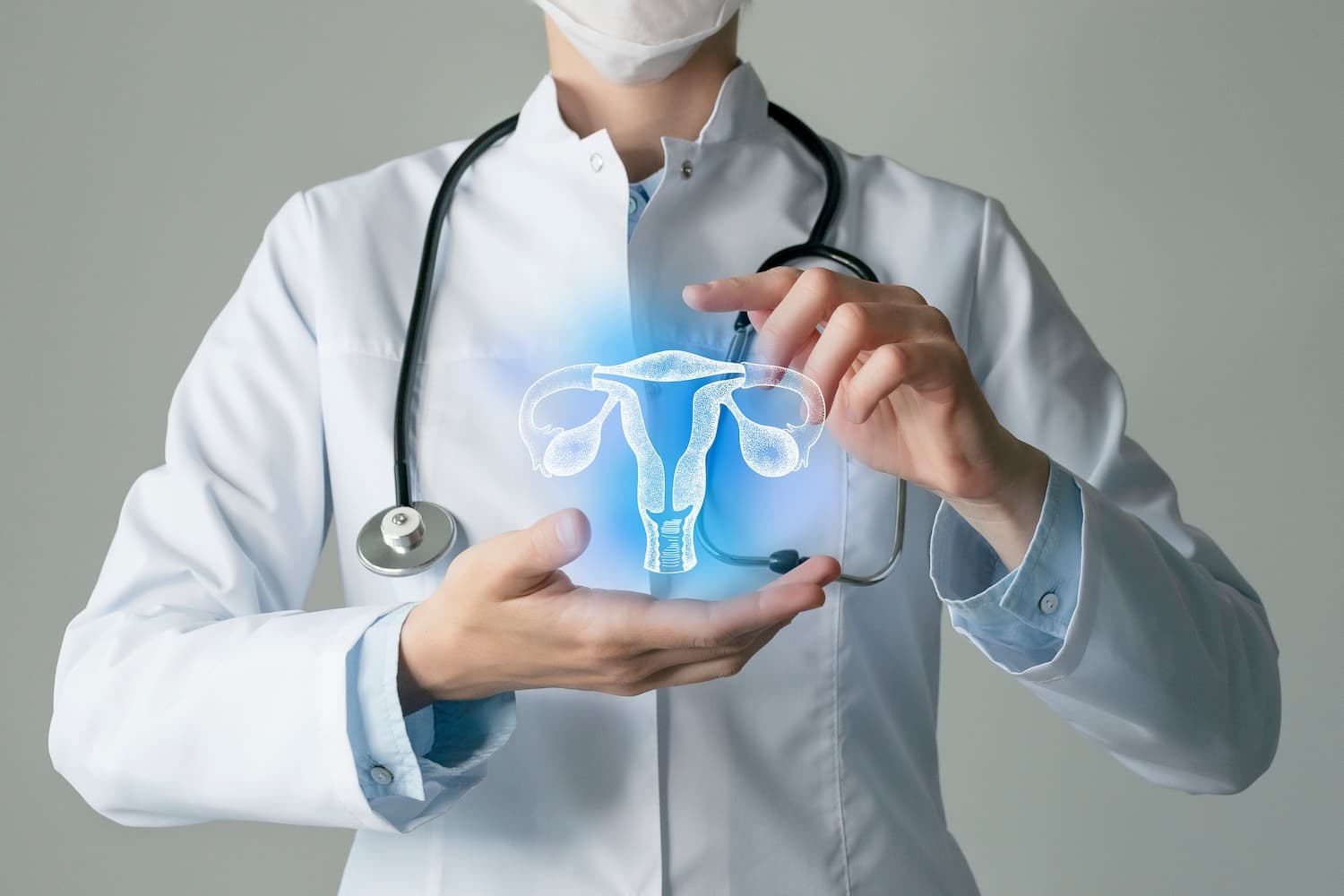
When to seek help, what testing may include and how treatment typically progresses
A PCOS diagnosis does not mean you will need IVF—or that pregnancy is out of reach. PCOS commonly affects fertility by making ovulation infrequent or unpredictable.
Because ovulation problems can often be treated, the most useful next step is a focused evaluation that confirms what is happening and checks for other factors before treatment begins.
For people considering PCOS fertility treatment in Fairfax, VA, this guide brings the full path into one place: preconception planning, first-visit testing, ovulation induction, IUI, IVF and fertility preservation. Your actual plan should reflect your age, cycle pattern, test results, partner evaluation, timeline and preferences.
How PCOS Can Affect Fertility
PCOS can interfere with the hormone signals that support regular follicle development and ovulation. Some patients ovulate occasionally; others have long stretches without ovulation.
A menstrual bleed does not always prove that an egg was released, which is why cycle history and targeted testing are more reliable than assumptions based on bleeding alone.
PCOS is not the only possible factor. Tubal conditions, endometriosis, uterine findings, age-related changes and sperm factors can also affect pregnancy. A complete evaluation avoids placing every delay on PCOS and helps the care team choose the most efficient treatment.
When to Schedule a PCOS Fertility Consultation
You do not always need to wait 12 months. It is reasonable to seek guidance before trying if your cycles are irregular, you want to review medications before pregnancy, or you would simply benefit from a preconception plan. Once you are trying, known or suspected ovulation problems are a reason to ask about earlier evaluation.
A Practical Timing Guide
Seek fertility evaluation promptly if periods are absent or irregular, or if another known fertility risk is present.
Otherwise, evaluation is generally recommended after 12 months of trying when the female partner is younger than 35, after six months at age 35 or older, and more immediately after age 40.
Your clinician may recommend a different timeline based on your history.
Before You Start Trying: PCOS Preconception Planning
- Review prescriptions and supplements, including medications used for acne, excess hair or metabolic health.
- Start a prenatal vitamin with the folic acid amount recommended by your clinician.
- Review vaccines, medical conditions, blood pressure and any needed preconception testing.
- Track cycle dates and, if advised, ovulation signs or predictor-kit results.
- Discuss nutrition, movement, sleep, tobacco or alcohol use and a sustainable weight strategy without delaying care solely for weight loss.
If pregnancy is several years away, ask whether fertility preservation is relevant to your goals. Egg freezing is not automatically necessary because of PCOS, but an individualized discussion can clarify age-related timing, expected response, costs and the limits of what freezing can guarantee.
What to Expect at a PCOS Fertility Evaluation
The first appointment is a planning visit, not a verdict. Your clinician will review your PCOS history, cycle pattern, prior pregnancies, medical and surgical history, medications and how long you have been trying.
Testing is selected to answer four core questions: Are you ovulating? What is the ovarian and uterine picture? Are the fallopian tubes open? Is there a sperm factor?
Testing May Include
- Hormone and metabolic laboratory testing tailored to your history
- Pelvic or transvaginal ultrasound
- Assessment of ovulation, sometimes with cycle tracking or a progesterone level
- Ovarian reserve testing when it will help with planning
- A semen analysis for the sperm-producing partner
- Tubal evaluation, such as an HSG, when indicated
Not every patient needs every test on day one. The goal is to gather enough information to choose the next step without ordering tests that will not change the plan.
PCOS Fertility Treatment Options
1. Ovulation induction — For infertility caused by anovulation and no other major infertility factor, letrozole is widely recommended as first-line medication. It is taken early in the cycle, and monitoring may be used to assess follicle development, timing and response. The number of cycles to try is individualized.
2. Timed intercourse or intrauterine insemination (IUI) — If ovulation occurs, pregnancy may be attempted with timed intercourse. IUI may be recommended depending on semen results, cervical or unexplained factors, treatment history and personal preference. It is not automatically required for every person with PCOS.
3. Injectable medication — Gonadotropins may be considered when oral ovulation induction is unsuccessful or inappropriate. They require closer ultrasound and laboratory monitoring because the risk of multiple pregnancy and ovarian over-response is higher.
4. In vitro fertilization (IVF) — IVF may be recommended when simpler treatment has not worked, when tubal or significant sperm factors are present, when genetic testing is planned, or when time is an important consideration. People with PCOS may respond strongly to stimulation, so the protocol is designed and monitored carefully to reduce ovarian hyperstimulation syndrome risk.
How Long Does PCOS Fertility Treatment Take?
There is no universal three-step calendar. An initial evaluation may be completed over several weeks or one menstrual cycle, depending on cycle timing and which tests are needed.
Treatment timelines then depend on response, age, diagnosis, emotional and financial priorities, and whether another infertility factor is found.
Before each stage, ask what success would look like, how many cycles your clinician recommends, what monitoring is required and what result would prompt a change.
A written plan with decision points is more useful than committing to an arbitrary number of cycles.
How to Choose a PCOS Fertility Specialist
- Look for a reproductive endocrinology and infertility specialist or a fertility team experienced with PCOS.
- Ask how the practice evaluates both partners and rules out non-PCOS factors.
- Expect a clear explanation of why each test or treatment is recommended.
- Ask about monitoring, medication risks, multiple-pregnancy prevention and OHSS risk reduction.
- Request transparent pricing and insurance guidance before treatment begins.
- Choose a team that provides written next steps and invites questions rather than rushing decisions.
Anna Health connects gynecology and fertility care within one Northern Virginia network. The fertility program is based at the Merrifield / Fairfax clinic, serving patients from Fairfax, Annandale, Falls Church, Alexandria, Reston, Woodbridge and surrounding communities.
PCOS Fertility Treatment: Frequently Asked Questions
Does PCOS mean I will need IVF?
No. When irregular ovulation is the main issue, many patients begin with oral ovulation induction. IVF is one option, not the automatic first step.
Can ovulation predictor kits work with PCOS?
They can be useful, but PCOS may cause confusing or repeated positive results in some people. Your clinician may combine home tracking with ultrasound or blood testing.
Should my partner be evaluated?
Yes. A semen analysis is a standard part of a complete fertility evaluation because more than one factor can be present.
Is weight loss required before treatment?
Not for everyone. Even modest lifestyle changes may improve ovulation or metabolic health for some patients, but care should be individualized, respectful and balanced against age and treatment timing.
What if I am not ready for pregnancy yet?
A preconception or fertility-planning visit can review cycle health, medications and future options. Egg freezing may be discussed when it fits your age, timeline and goals.
Schedule a PCOS Fertility Consultation in Fairfax
Meet with the Anna Health fertility team for individualized evaluation, treatment planning and transparent next steps.
Consultations, monitoring and fertility treatment are available by appointment at the Merrifield / Fairfax clinic.
Call (703) 642-7522 4208 Evergreen Lane, Suite 213, Annandale, VA 22003.