If you are considering fertility testing, understanding the steps involved can ease a lot of uncertainty. This guide walks through every stage of the process, the key tests your team may order, and what the results can and cannot reveal, so you can move forward with confidence.
The 7 Key Steps of a Fertility Workup
1. Initial consultation
Testing usually begins with a conversation. Your specialist reviews your medical history, your goals, and any concerns you have. This is your opportunity to share important details and start building a personalized plan.
2. Physical examination
A thorough physical exam assesses your overall health and helps rule out underlying conditions. For women, this often includes an evaluation of the reproductive organs.
3. Semen analysis for men
For male patients, a semen analysis evaluates sperm count, motility (how well the sperm move), and morphology (sperm shape). These factors help identify potential male-factor concerns and guide treatment.
4. Blood tests for women
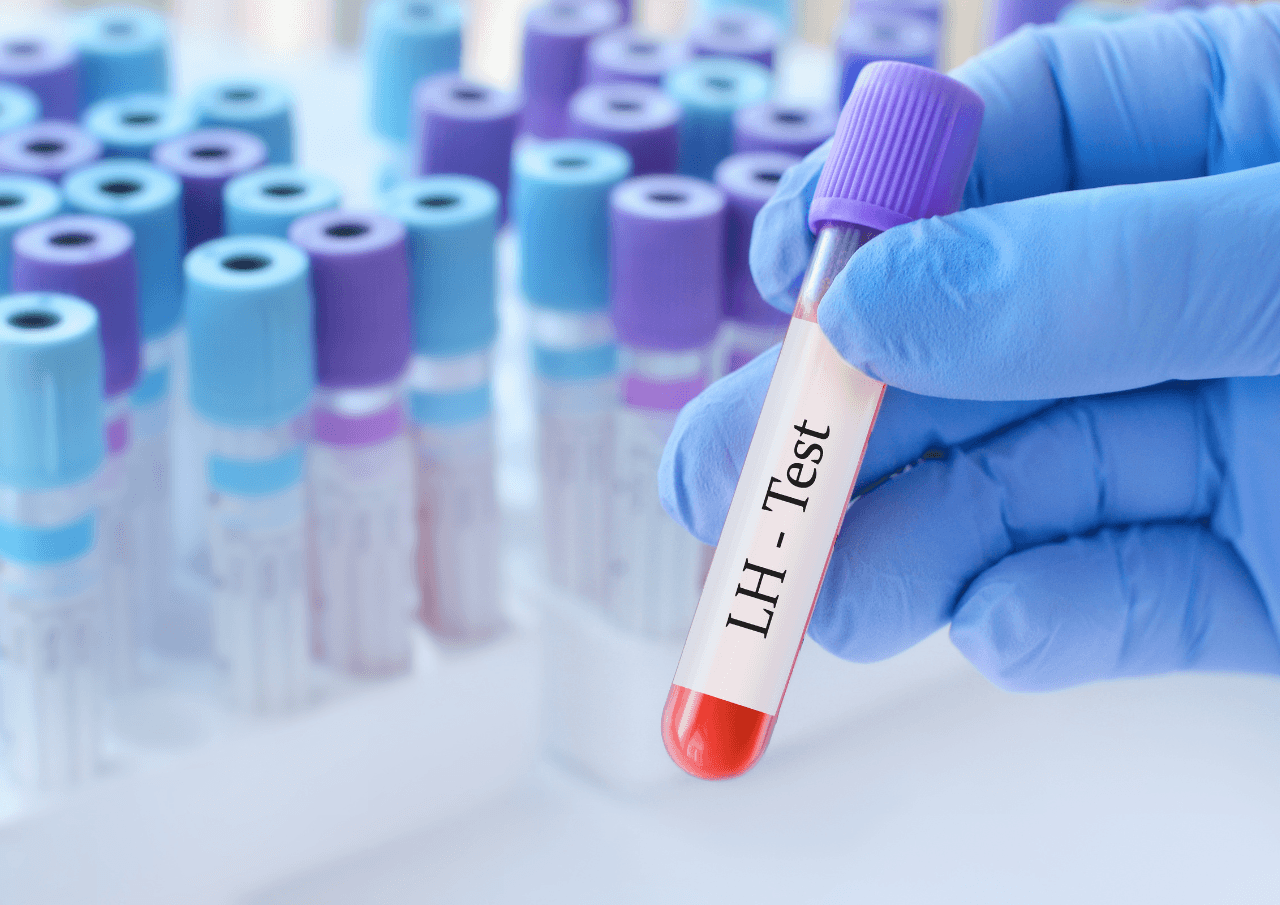
Bloodwork measures key hormones that regulate ovulation and reproductive health, including FSH, LH, estradiol, AMH, and progesterone. Timing matters, because several of these levels shift across the menstrual cycle.
5. Imaging tests
An ultrasound examines the uterus and ovaries and can detect fibroids, cysts, or other findings that may affect fertility. In some cases, imaging of the fallopian tubes is used to check for blockages.
6. Genetic screening
Genetic screening can identify inherited conditions that may affect fertility or future pregnancies, helping you make informed decisions.
7. Follow-up consultation
Finally, your provider reviews the results in detail, explains what they mean, and outlines treatment options tailored to your needs.
Understanding the Key Hormone Tests
Hormone results can feel like a foreign language. Here is what the main players tell your care team:
- FSH (follicle-stimulating hormone): Tested early in your cycle, FSH helps mature eggs. Higher day-3 levels may suggest your ovaries are working harder, which can point to reduced ovarian reserve.
- AMH (anti-Müllerian hormone): AMH stays fairly steady throughout the cycle, so it can be measured on any day. It offers a reliable estimate of remaining egg quantity. Lower numbers may suggest diminished reserve, while higher numbers are sometimes linked to PCOS.
- LH (luteinizing hormone): A surge in LH triggers ovulation. An imbalance, especially relative to FSH, can signal ovulatory issues.
- Estradiol: A high estradiol level early in the cycle can artificially suppress FSH, making ovarian reserve appear better than it is.
- Thyroid and prolactin: These hormones influence cycle regularity and ovulation. Even small imbalances can affect fertility.
- Progesterone: Often checked later in the cycle to help confirm whether ovulation occurred.
A Closer Look at AMH
AMH is a protein released by cells in the small follicles of the ovaries. Because it can be measured in the bloodstream, levels correspond closely with egg supply. AMH rises through early adulthood and then gradually declines as ovarian reserve decreases over time.
It is important to know what AMH does and does not measure. A high level suggests a good number of remaining follicles, while a low level may indicate reduced reserve for your age. However, AMH reflects quantity, not egg quality, and age remains the biggest factor in quality. A low number does not mean pregnancy is impossible, and a high number does not guarantee it. AMH is most useful for helping your doctor predict how your ovaries may respond to fertility medications.
What Testing Can and Cannot Tell You
Hormone testing can reveal patterns: whether ovulation appears regular, whether reserve may be lower or higher than expected, and whether conditions like PCOS or thyroid dysfunction may be involved.
What it cannot do is predict exactly whether or when pregnancy will happen. Normal results do not guarantee fertility, and abnormal results do not rule it out. Tests also do not directly measure egg quality or detect structural issues like blocked tubes, which require imaging. That is why a complete evaluation, interpreted by an experienced provider, matters far more than any single number.
When to Consider Fertility Testing
Testing may be worth discussing if you have irregular cycles, have been trying to conceive without success, or have symptoms of hormonal imbalance such as unexplained weight changes, acne, fatigue, or abnormal hair growth. Many people under 35 consider testing after about a year of trying, while those over 35 often choose to evaluate sooner, since fertility naturally declines with age. Testing can also help if you are planning ahead, considering egg freezing, or simply want a clearer picture of your reproductive health.
Frequently Asked Questions
Do I need to fast or prepare for AMH testing? No special preparation is needed, and AMH can be drawn on any day of your cycle.
How long until I get results? Most blood test results are available within a few days, and your provider will review them with you in context.
Will both partners be tested? Often, yes. Evaluating both partners gives the most complete picture.
Booking CTA
Ready to take the next step? Our experienced fertility team is here to guide you through testing and explain your results clearly and compassionately.
Ready to schedule? Call (703) 462-8665 or request an appointment online. Learn more about our fertility services.
Educational content; not a substitute for individual medical advice.