Trying to conceive for months without a positive test can leave you wondering whether it is worth continuing on your own a little longer or looking into fertility treatments instead.
That decision does not have to be made in the dark, since age, health history, and how long you have been trying all factor into when it makes sense to seek out a specialist.
Should we keep trying naturally or move forward with fertility treatments in VA? An honest answer depends on a few specific factors, and looking at what the evidence says can make the decision clearer.
Understanding when treatment tends to help, and how often couples conceive without it, can take some of the guesswork out of this decision.
It can also make the next step feel less like giving up and more like moving forward with a solid plan.
Should We Keep Trying Naturally or Move Forward with Fertility Treatments in VA?
Age plays one of the biggest roles in this decision, since fertility declines gradually through your 30s and more noticeably after 35.
Most providers recommend trying for at least a year before seeking evaluation if you are under 35, six months if you are 35 to 40, and evaluation right away if you are over 40.
Certain signs point toward evaluation sooner regardless of age, including irregular or absent periods, a history of endometriosis or pelvic inflammatory disease, repeated miscarriages, prior cancer treatment, or known fertility concerns in either partner.
These circumstances suggest that continuing to try on your own for the full year may not be the most useful path forward.
If none of these apply and you are still within the general timeframe for your age, continuing to try naturally is a reasonable choice. Keeping some enjoyment in the process, rather than letting it become a strict routine, can also help ease the stress that research links to poorer outcomes down the line.
Why Many Couples Do Conceive Without Treatment
Infertility has a wide range of causes, and roughly one third of cases involve female factors alone, another third involves a combination of male and female factors, and the remaining cases are either unknown or also involve a mix of factors from both partners.
Even if a cause remains unidentified, many couples with unexplained infertility go on to conceive over time.
In the United States, about one in five married women between the ages of 15 and 49 with no prior births are unable to get pregnant within a year of trying.
That number reflects how many people are still trying at the one-year mark, not a prediction of who will or will not eventually need treatment.
A difficult year on its own does not tell you much without more information. Getting an accurate evaluation, whether you go on to keep trying naturally or begin treatment afterward, replaces that uncertainty with something more concrete.
What Moving Forward with Treatment Can Look Like
Should we keep trying naturally or move forward with fertility treatments in VA? Moving forward does not mean starting with the most involved option, since evaluation usually comes first and treatment is matched to what that evaluation finds.
Testing might include a semen analysis, an assessment of your fallopian tubes, and a look at ovarian reserve, depending on your specific situation.
From there, treatment options can include timed intercourse and medication to support ovulation, procedures like intrauterine insemination, or in vitro fertilization for more complex cases.
Many people never need the most advanced option, since the right treatment depends entirely on what is causing the difficulty.
Moving forward with treatment gives you and your care team more specific information about what might help. That clarity tends to make the process easier to plan around, even when the underlying cause takes time to fully understand.
A Provider You Can Rely On
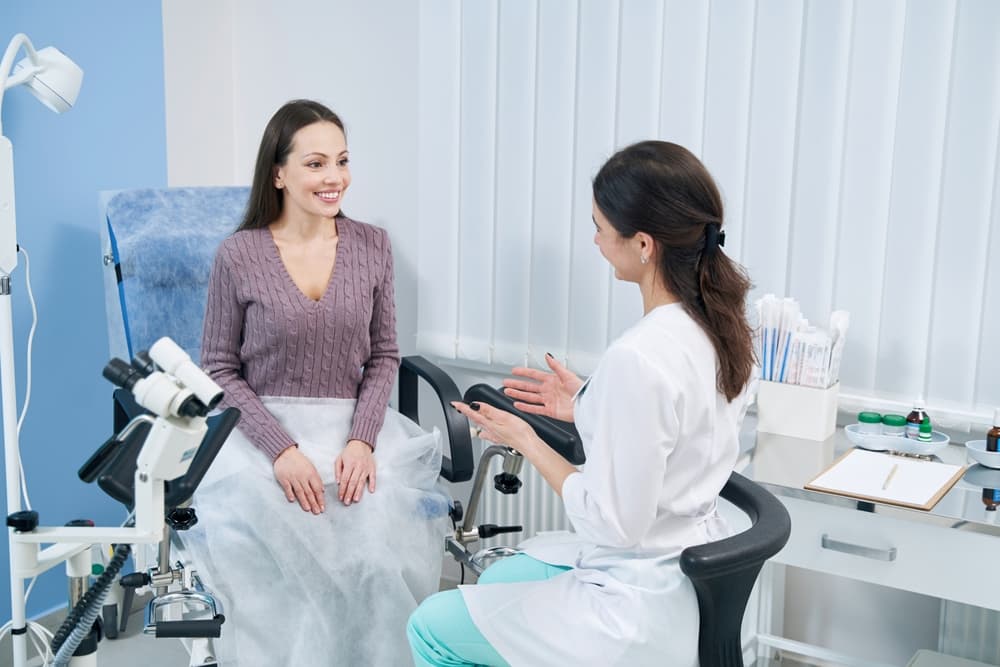
Anna Health's fertility team in Northern Virginia can review your health history, cycle regularity, and goals to help you decide whether continuing to try naturally or starting evaluation makes more sense for you and your partner.
Request a fertility consultation online or call 703-462-8665 today.