Polycystic ovary syndrome, or PCOS, has a new name: Polyendocrine Metabolic Ovarian Syndrome, or PMOS.
The terminology changed in 2026 to better reflect something patients and clinicians have understood for years: this condition is not simply about ovarian “cysts.” It can affect hormones, menstrual cycles, metabolism, skin, ovulation, fertility and long-term health. You will likely continue seeing both PCOS and PMOS used while the new terminology becomes more familiar.
What does PCOS / PMOS actually affect?
PMOS does not look exactly the same in everyone.
Some people first notice irregular or missed periods. Others seek care for acne, excess facial or body hair, thinning scalp hair, difficulty becoming pregnant or changes in weight and metabolic health. Some do not recognize a pattern until they stop hormonal birth control or have testing for another reason.
Possible signs include:
- irregular, infrequent or missed periods
- acne or excess facial or body hair
- thinning scalp hair
- inconsistent ovulation
- difficulty becoming pregnant
- insulin resistance or other metabolic changes
- changes in weight or difficulty managing weight
You do not need to have every symptom to have PMOS.
Do you need ovarian cysts to have PCOS?
No.
Despite the old name, typical ovarian cysts are not required for diagnosis.
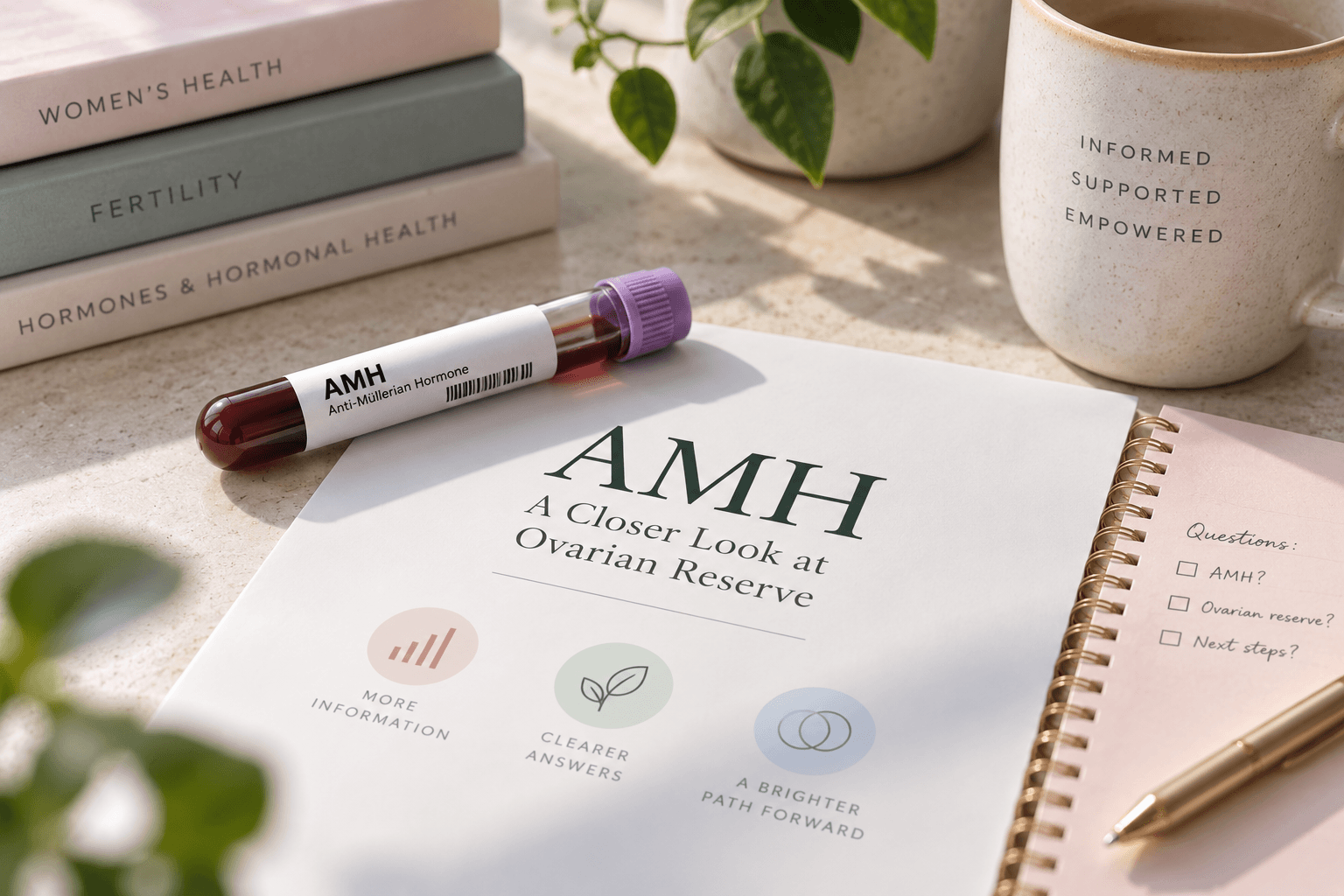
In adults, diagnosis generally looks for a combination of features such as irregular ovulation or menstrual cycles, signs or laboratory evidence of elevated androgens, and polycystic ovarian morphology. Ultrasound may be useful in some patients, and current guidance also allows AMH to be used in selected adults as an alternative marker of polycystic ovarian morphology.
But there is no single blood test, ultrasound finding or symptom that diagnoses every patient. Other conditions that can cause similar symptoms may also need to be ruled out.
That distinction is one reason the newer name matters: PMOS is a hormonal and metabolic condition, not a diagnosis of ovarian cysts.
Read more about the name change here: Science Is Moving Forward: PCOS Is Now PMOS, and What That Means for You
What counts as an irregular period?
Cycle patterns are one of the clues clinicians use when evaluating possible PMOS.
For adults more than three years beyond their first menstrual period and before perimenopause, current international guidance considers cycles shorter than 21 days, longer than 35 days, or fewer than eight cycles per year irregular.
That does not mean an unusual cycle automatically means PMOS. Thyroid conditions, elevated prolactin, certain adrenal conditions and other health changes can cause overlapping symptoms, which is why evaluation looks at the whole picture rather than one symptom alone.
What does insulin resistance have to do with PCOS?
The “Metabolic” in PMOS is important.
Insulin helps move glucose from the bloodstream into cells. When someone has insulin resistance, the body needs more insulin than usual to do that job. Higher insulin levels can interact with reproductive hormones and contribute to androgen excess and disrupted ovulation.
PMOS is also associated with increased risk of impaired glucose tolerance and type 2 diabetes, so metabolic health may be worth assessing even when a patient's main concern is periods, acne or fertility.
And PMOS is not limited to any one body size. Weight alone cannot diagnose or rule out the condition, and PMOS should not be framed as something a patient caused through lifestyle.
Can you get pregnant with PCOS?
Yes.
PMOS can make conception less predictable because it commonly affects ovulation. Someone may have menstrual bleeding without releasing an egg consistently, so having periods does not always tell us whether ovulation is occurring regularly.
But PCOS does not automatically mean infertility. Many people with the condition become pregnant naturally or with treatment depending on their circumstances.
If pregnancy is a goal and your cycles are irregular—or you have been trying without success—a fertility evaluation can help determine whether ovulation or another factor may be involved.
What changes if you become pregnant?
Having PMOS does not mean you cannot have a healthy pregnancy.
The condition is associated with higher rates of some pregnancy complications, including gestational diabetes and hypertensive disorders. Preconception care may therefore include reviewing medications, metabolic health, blood pressure and other individual risk factors.
Once pregnant, prenatal care can be tailored to the patient's history and pregnancy course.
How is PCOS / PMOS treated?
There is no one treatment plan because there is no one version of PMOS.
Care depends on what is actually affecting you: menstrual irregularity, androgen-related symptoms, metabolic health, fertility goals or some combination of those things.
Treatment may include hormonal medication, support for metabolic health, treatment for acne or excess hair growth, fertility treatment when pregnancy is desired, and lifestyle measures appropriate to the individual patient.
The point is not simply to “treat the ovaries.” It is to address the parts of the condition that are affecting your health and your goals.
Which doctor should you see for PCOS?
That depends on what brought you in.
Gynecology often addresses irregular periods, hormonal symptoms, abnormal bleeding and diagnosis. Family Medicine can help with metabolic and preventive health. Fertility care may become important when ovulation or difficulty conceiving is the primary concern, and Obstetrics takes over many of the relevant considerations during pregnancy.
For Anna Health patients in Northern Virginia, that means PMOS care does not necessarily have to live in one specialty. Gynecology & Obstetrics, Family Medicine and Fertility can each become relevant as needs change over time.
When should you ask about possible PCOS?
You do not need to decide whether you “meet the criteria” before making an appointment.
If your periods are consistently irregular or absent, you have new or increasing androgen-related symptoms such as facial hair or acne, you are having difficulty becoming pregnant, or several symptoms seem to be occurring together, it is reasonable to bring up PCOS/PMOS with a healthcare professional.
An evaluation is meant to determine whether PMOS—or something else—is actually causing those changes.
Concerned about irregular periods, hormonal symptoms, metabolic health or fertility? Start with the Anna Health care team that best matches what you’re experiencing.
FAQ
Is PCOS officially called PMOS now?
Yes. Polyendocrine Metabolic Ovarian Syndrome, or PMOS, was introduced in 2026 as the new name for PCOS. Both terms will remain in use during the transition.
Are ovarian cysts required for PCOS?
No. Typical ovarian cysts are not required for diagnosis. Diagnosis depends on the broader clinical picture.
Can you get pregnant with PCOS?
Yes. Many people with PMOS become pregnant naturally or with treatment. Irregular ovulation can make conception more difficult or less predictable.
Does PCOS cause insulin resistance?
Insulin resistance is common in PMOS, although metabolic involvement varies from person to person.